Out of the spotlight: “I’m just another face in the crowd, that’s all”

Bob, 75

My Life in a Nutshell

  • I’m a widower and retiree who lives in rural Northern Ontario, and come from “the last generation of frontier people.”
  • I care about my family: “I’d like to see them happy”
  • I wish people cared more about the truth
  • I look back fondly on my childhood, “because my family had a large general store and there were still a lot of people in the community. We used to have a lot of good times during the holidays, Easter, Christmas and so on. We used to go blueberry picking together and all that”
  • I love to draw and paint and wanted to be an artist, but I never pursued it because “it seemed frivolous”
  • my wife and I faced discrimination because people weren’t as accepting of interracial marriage in the 1970s
  • my greatest regret is I that I didn’t “treat my wife better,” I didn’t understand how PTSD from her childhood impacted her throughout her life
  • I was an Olympic-calibre athlete but suffered a severe spinal injury
  • I was once an atheist but now believe in God
  • I built my family home and I built my cabin single-handedly
  • my life became a disappointment but I am still “basically happy”

Bob’s Story

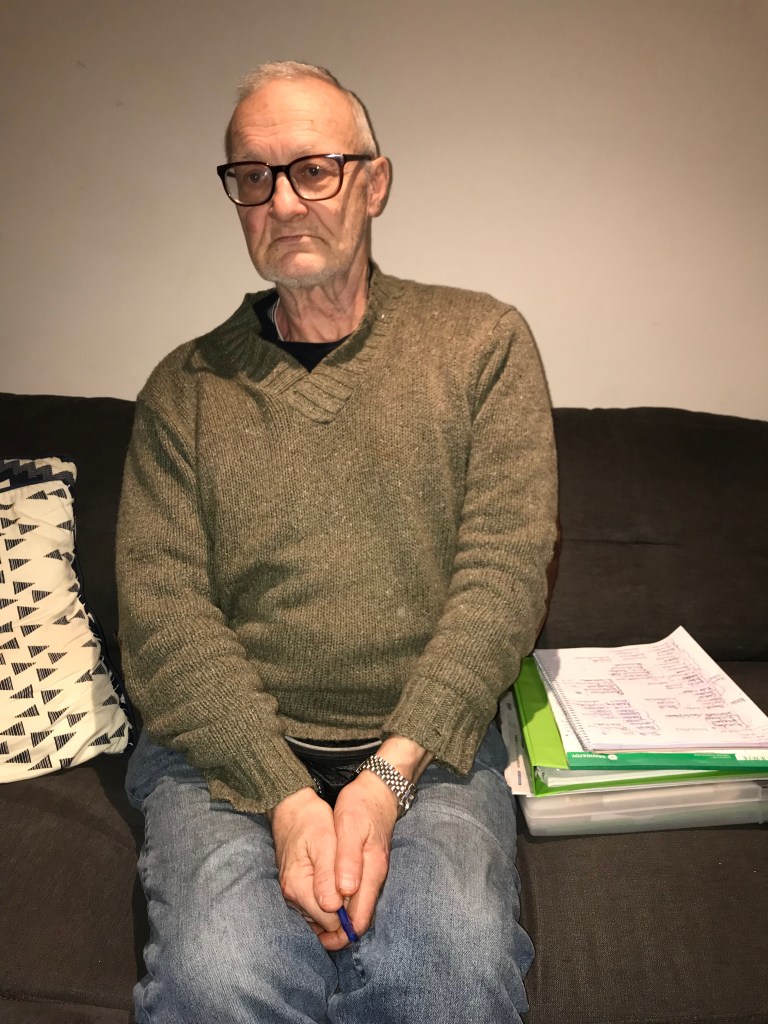
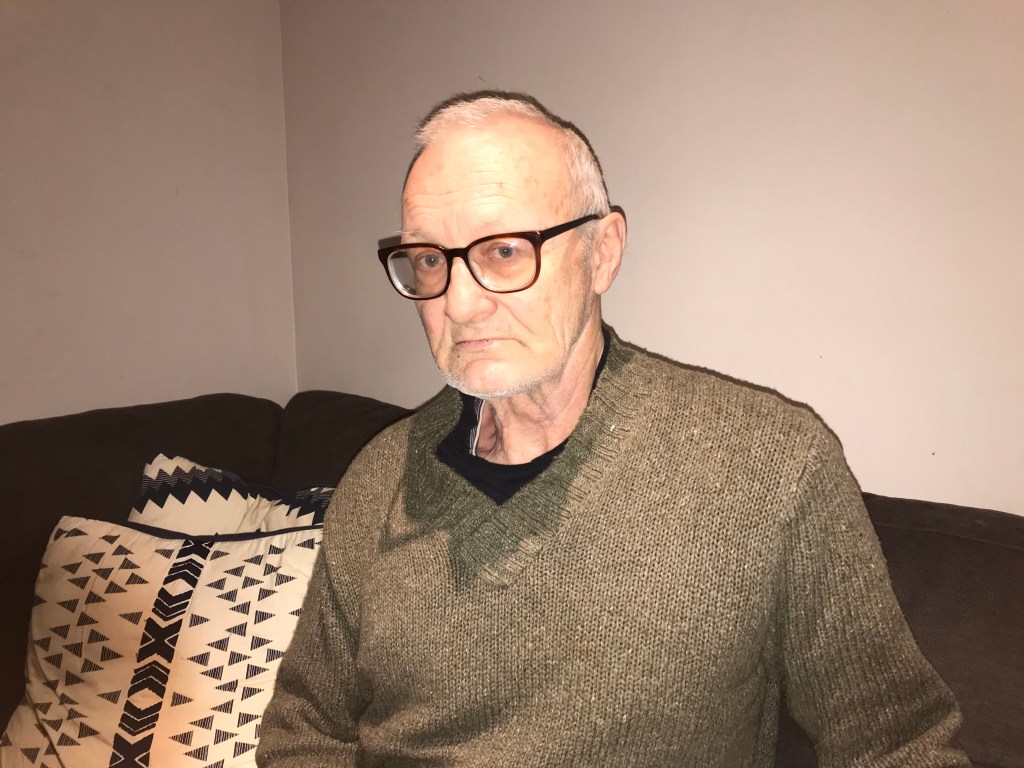
Bob’s face is bristled with a light dusting of white whiskers, his hair, what remains of it, is trimmed close to his head. He is not a frail older man; nor, however, is he glowing with health. He is well-built, though, particularly for a 75-year-old man, despite the fact he appears fatigued.

When I sit down with him he is writing notes in lined a notepad.

“I’m making lists. This one is about all the foods I can grow in my garden. This one is about new research, new ideas. You can always find an interesting book, some of them on cancer.”

Bob reveals he has battled cancer this year, and spent nine months receiving chemotherapy and other treatments.

“From the time I was a little boy I always liked to have warm feet,” he says. “Now that I had chemo for cancer I’m having trouble with cold feet.”

Bob says he discovered some lumps in his abdomen and groin more than two years ago, but he ignored them until he experienced a “severe pain” last December. He went to see a doctor, and a slew of appointments with specialists soon followed. Bob would learn he had lymphoma just after Christmas.

“It was hard to endure, but I never doubted I would get better. And when I learned to pray and asked God to heal me — it just disappeared. I can’t say for sure that God healed me, it could have been the medicine, but everybody was surprised, including the oncologist.”

Bob finished chemo this summer, and just last week had his three-month checkup. Thankfully, there was still no trace of cancer in his body.

“I was surprised, I was expecting to go through radiation therapy.”

Cancer is a terrifying diagnosis, and chemotherapy is notoriously unpleasant. Still, this is not what Bob would describe as the greatest hardship he’s ever endured. He says he suffered a spinal injury when he was at a track and field meet in high school, and for a short time he couldn’t walk.

“I had this terrible fear. I realized: ‘I’m paralyzed. I’m not going to live this way. I’m going to kill myself.’ My intention was to hang myself, because I could still do that.”

But Bob says his back miraculously repaired itself. Once again, he credits God for his recovery.

It is an interesting turnabout, for a man who was a self-admitted atheist most of his life. Bob says he only became religious in the last few years.

“I learned how to pray. So my prayers can be heard in heaven.”

While religion currently preoccupies him, Bob’s life has been one of exploration — both literally and figuratively. He loves books, reading and reflection, but he also loves the outdoors. He has lived across the country, in both rural and urban settings, and has had a variety of careers — from landscaping and forestry, to owning and operating a restaurant and two corner stores.

“I wasn’t particularly interested in anything, so I just wandered around from one thing to the other, to keep from getting too bored with life.”

Bob actually met his wife of 35 years when he was the supply manager in a hospital in small-town Ontario.

“She came here as a nurse. She’d been in Newfoundland and she was lonely. There were no Koreans there and she could barely speak English. So when she heard there were some Korean girl nurses in the hospital where I was, she came over.”

They married ten months later. He built the home they lived in when she was pregnant, and their first child was just an infant.

“I started in August one year, and I finished it in the spring, the next year, because we moved in in June.”

I express surprise that he built the family home, a four-bedroom with a greenhouse, completely on his own.

“Well, in the country, people did most of their own building,” he says. “I like working with groups of men outside. I used to get involved with building, watching them, working on barns and that sort of thing.”

Bob describes his marriage as having many highs and lows. He says his wife lived through the Korean War and suffered from PTSD, something he wishes he’d better understood when he was younger.

“If there was 50 ways to go from point A to point B I would want to take every one — one after the other — to see what was there. But not her. She had to always have the exact same routine, or she would go nuts. She couldn’t take any stress.”

Bob says he and his wife could not have been more different. He had a “happy childhood”, while she grew up in wartime and lost her father. She was also from Seoul, a huge city, while he was born and raised in rural Canada.

But when they met, he says, “there was instant recognition.”

Still, while he never “thought a whole lot” about the fact his wife was a different race, he says others did question their decision to marry.

“Because it wasn’t that common.”

He says, at times, they faced discrimination — and it didn’t matter if they were living in a small town or a larger city. And they faced condemnation from both caucasians and asians. Thankfully, he says, people’s attitudes are changing.

“It’s becoming more common, interracial marriage.”

His wife died 15 years ago, from pancreatic cancer.

“Oh, that was difficult. But the marriage was slowly coming apart because we had such different backgrounds,” he says. “I didn’t really adapt well to living in the city because all of my education was in forestry and agriculture.”

Still, he lists getting married as a highlight of his life, along with the moments his two children were born.

Now, he says, his greatest hope for the future is: “to live long enough to see my grandkids growing up.”

And while he says he has regrets, and has “often” made bad decisions, he is content.

“More or less. I don’t know if I ever knew joy, but I’ve always basically been happy.”

Bob is currently retired. He owns a home he shares with his sister, often visits a cabin he built himself, and lives surrounded by close family.

“I’m just another face in the crowd, that’s all. I’ve never been important,” he says. After a short pause, he adds, “I never wanted to be.”
A life behind the lens: “Paul Bernardo was just a foot away from my camera”

K.D., 61

My Life in a Nutshell:

  • I care more about friends as I get older
  • I wish people cared more about their health
  • A significant hardship I’ve endured is being away from family
  • I’m the fifth of nine children, but never had any children of my own
  • I have been a cameraman for nearly 40 years and have covered stories all around the world
  • My career has been important to me and I take pride in my work
  • It bothers me if I get a feeling my work or effort isn’t being appreciated
  • I sometimes wonder if I should ever have moved to Toronto
  • I wish people would look at me and think: “This guy has his shit together”
  • I am “half and half” on a happiness scale
  • I’m a sociable guy, but I don’t get out enough

K.D.’s story

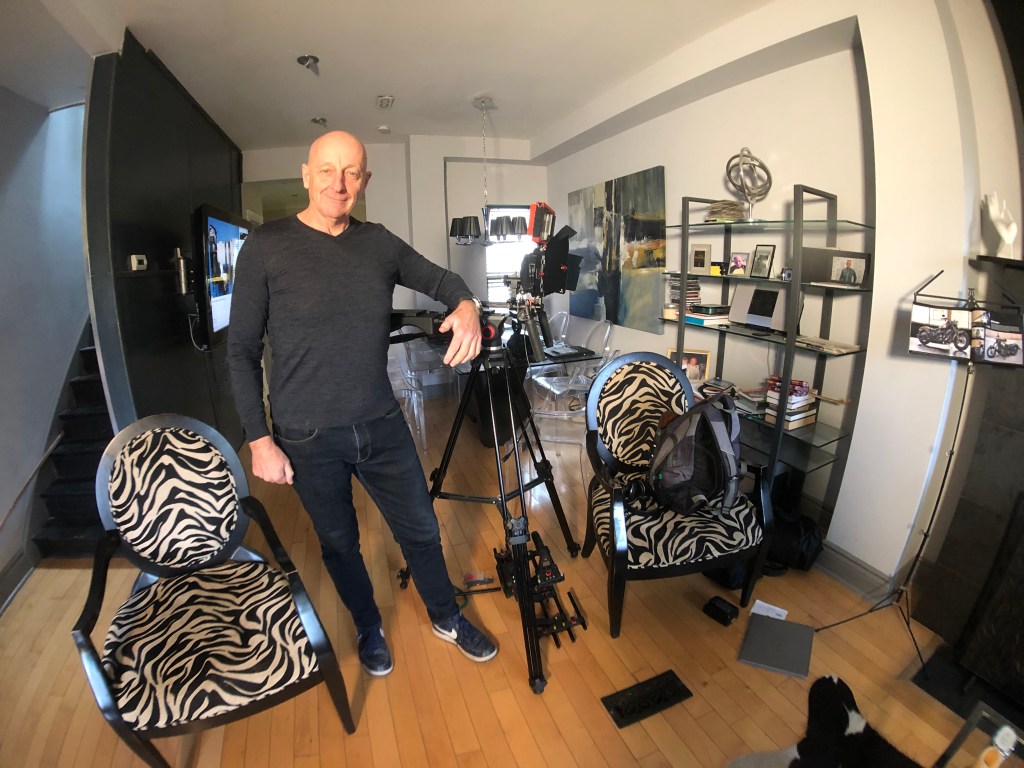
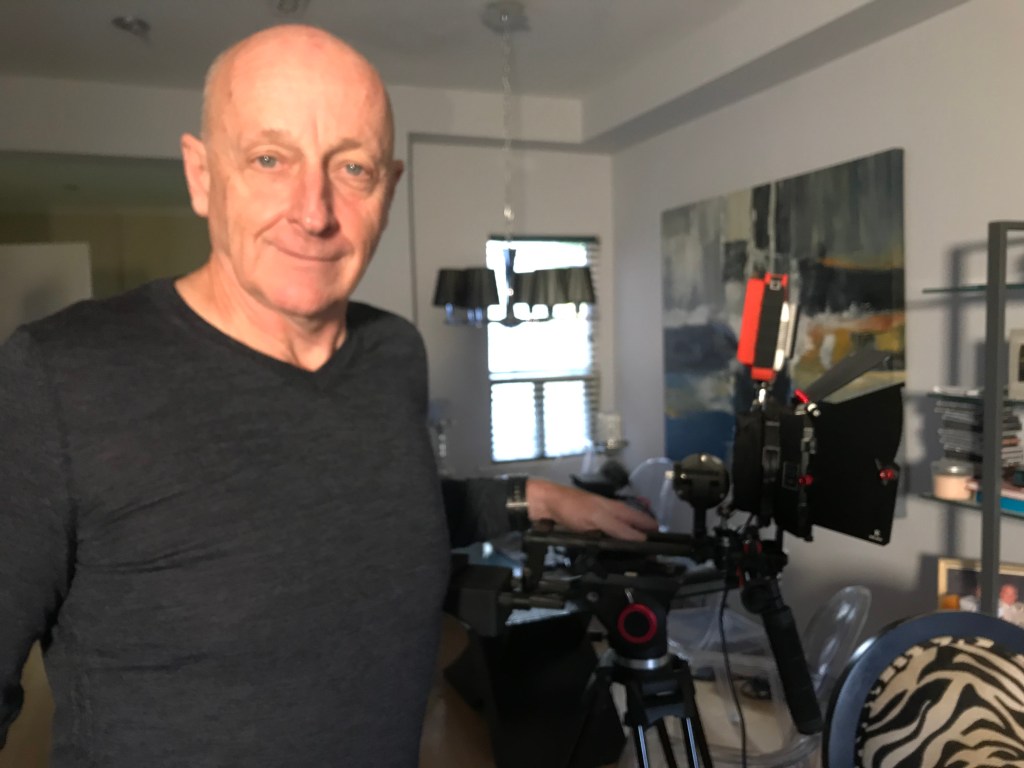
When I walk into K.D.’s home, a handsomely decorated semi-detached near Casa Loma, dozens of pieces of state-of-the-art camera equipment are strewn across his living room.  The 61-year-old is a veteran news cameraman, but he’s a newly minted freelancer.

“I don’t really have to work, so I’m not nervous.  But it’s a learning curve, going from a $50,000 to an $11,000 camera — it’s a learning curve.  They’re finicky.”

For 37 years, K.D. worked at one of Canada’s leading broadcasters.  In a recent round of cutbacks, however, the senior shooter accepted a package he couldn’t refuse.  

“It was a perfect time to leave.”

It wasn’t, however, a perfect time to retire.

“I don’t like that word,” he says.  “I’ve had a decent life and there’s still lots left.  I don’t think of myself as old.  I don’t want to get into that mindset.”

So now K.D. is starting over, picking up equipment and jobs where he can.  

“You know, I did a shoot with a former colleague recently and got paid quite a bit of money, so I hired an editor to come to my house.  We had bagels and coffee.  It was stress-free.  It was fun, so it was a good experience.”

It is a stark juxtaposition to the way K.D. started out in the business. 

“My first year I was so nervous, and I was driving what looked, essentially, like an old police car, and I almost hit a hydrant.  I ended up scraping the side and the back accidentally, and I was so nervous about losing my job I took it to an auto body shop and paid to have it repaired,” he says with a laugh.

K.D. was just 26-years-old when he began working in Toronto, Canada’s largest city.

“It was tough, very tough.”  

In fact, he says, in some ways camera work was the last thing on his mind when he was a “greenhorn.”

“There’s a lot of things you have to learn about this job.  Where to park, dealing with people, going to shooting scenes, wondering if you’re going to get shot, pushing the envelope with the cops to get the shot.”

But the nerve-wracking first years aside, K.D. went on to have an illustrious career, covering major news stories both at home and abroad.

“Because of my ability, people loved to work with me.  It gave me a good feeling that people had confidence in me, so I excelled at my work.  Work was probably pretty important to me because I didn’t have a family.”

K.D. has seen plenty of danger.  He spent a month covering the Gulf War.

“We weren’t sleeping, alarms were going off.  We’d get up to work all day and we’d get up in the middle of the night because planes would take off, the hotel would shake.  Scuds would come by fairly close, so we’d try to get shots.”

He’s also met some of the most dangerous human beings on the planet.

“Paul Bernardo was just a foot away from my camera.  I couldn’t believe how close he was.  I could have slugged him,“ he says of the moment he shot the notorious serial killer.  

“I looked him in the eye — he was about the same height.  I wanted to see if I could see the evil in him.  And I couldn’t see anything.”

K.D. has also met some of the most famous A-Listers in the world.

“Nicole Kidman just left a good impression.  We got her coming into the Princess of Wales Theatre, but she was coming by during the commercial break.  But she stayed and waited and we did our live with her. It’s amazing how some stars are just so accommodating.”

The ever-stylish cameraman, who has a penchant for Hugo Boss, has come a long way from his roots.  Not only is he 170 kilometres from his hometown, but as the fifth child of nine, he wore nothing but hand-me-downs as a child.

“When I was a little guy we’d get new underwear and socks, but when it came to pants and shirts, we’d open up the big red box in the basement and reach in and find something that fit us,” he recalls.  “Most of the time, they didn’t fit.  One time I remember pulling out a pair of green bell bottoms and they didn’t fit, but I wore them anyway,” he says.

Still, he says, given his “old-fashioned” upbringing, fashion didn’t matter to him.  As a youngster, his priorities were quite different.

“Just going to the river fishing, swimming in the river, staying there all day.  Making go-karts, climbing trees, the skating rink in the backyard, always being active.  It was great growing up.”

K.D.’s father worked on trains for the Canadian National Railway.

“All he did was work and bring money home.  We didn’t have much money, but we never starved. Although, with nine kids, you didn’t eat as much,” he says.  “The big thing was Kentucky Fried chicken.  If we had a bucket — boy, that was a big thing.”

While his father was laid back, he says his mother was the disciplinarian.   

“You didn’t want to be caught doing something.  She’d drive around with a wooden spoon looking for me and I’d be hiding in a bush,” he laughs.

He says, over the years, he has often wondered if he made the right decision in moving to Toronto. 

“Because as you get older — both of my parents are dead, and I didn’t see them much in my latter years.  It would have been a different path.”

In fact, he says, the biggest hardship he’s had to endure is being away from family.

“I can’t call up my sisters.  If they were here, I could call them and say, ‘Hey, let’s go to a restaurant.’  I don’t have that luxury where I can call any of them and say, ‘Let’s go out tonight.’  I’m sure a lot of people live with it; but, you know, your life is much more full when you have family around.”

That being said, K.D. admits life in London, Ontario would not have suited him.  He’s used to the fast pace of a big city and its restaurants and culture.

“When I drive my motorcycle North, it takes forever to get out of Toronto.  And when I get out to the suburbs, I think to myself, ‘I couldn’t live there, because it’s so far from everything.’ I have a subway right near.  I can walk to Yorkville in 12 minutes.”

At this point in his life, K.D. says he is fairly happy and enthusiastic about life, although at points he struggles with loneliness. 

“I don’t do well by myself all the time.”

That is why friendship is increasingly important to him. 

“I care more about friends as I get older, and making an effort at staying in touch.  I lost touch with a lot of people over the years.”

K.D. has had long-term girlfriends, but none of his relationships have ever stood the test of time.  He has no children.

“Certainly, I want to be with somebody, but I’m not letting it eat at me.”

And while he’s never been lucky in love — he’s had a lot of luck with real estate. 

“I bought a condo, bought a house, and have a rental apartment.  I wish I’d bought more, years ago, but things have skyrocketed.  And it’s a good experience.”

With his substantial package and pension, along with income from his rental properties, K.D. is well-situated financially.  It makes the prospect of freelancing more appealing.

“Once you get off the treadmill of work, you realize — ‘Huh, I’m okay.  I could do what I want.’”

And while everyone has regrets, K.D says he tries not to dwell on them.

“I could analyze and rip my life apart as much as I want.  ‘Why didn’t I stay with that woman or have a kid?’  I certainly would have had a different life.  But honestly, sometimes I just thank God I’m by myself.  I try to keep a positive outlook.”

K.D will be going to Bali for a couple months over the winter, and does not rule out freelancing while he’s there.  He’s also expecting some friends to visit. 

“Just because I’m alone, I’m not really alone,” he says.  

“The point is, I want people to to think of me as a nice person, and that I’m smart and that I have my shit together.  I want them to think I I try to go the correct route, try to stay healthy, try to stay in touch with family, and that I’m not bad off.”

Injuries drastically alter life of “mountain man”

Ronald Piet, 62

My Life in a Nutshell

  • I care about high-quality music, audio and video productions
  • I wish others cared more about noise pollution
  • A significant hardship I’ve endured is dealing with the aftermath of a streetcar collision
  • I’ve been married and divorced twice
  • My greatest regret is not having children
  • Something I look back fondly on is living off-the-grid for two years
  • I think others view me as sensitive, intelligent and kind, and think I’m a great cook
  • I am generally happy
  • I would have liked to have travelled more to see other continents and their art and culture

Ronald’s Story

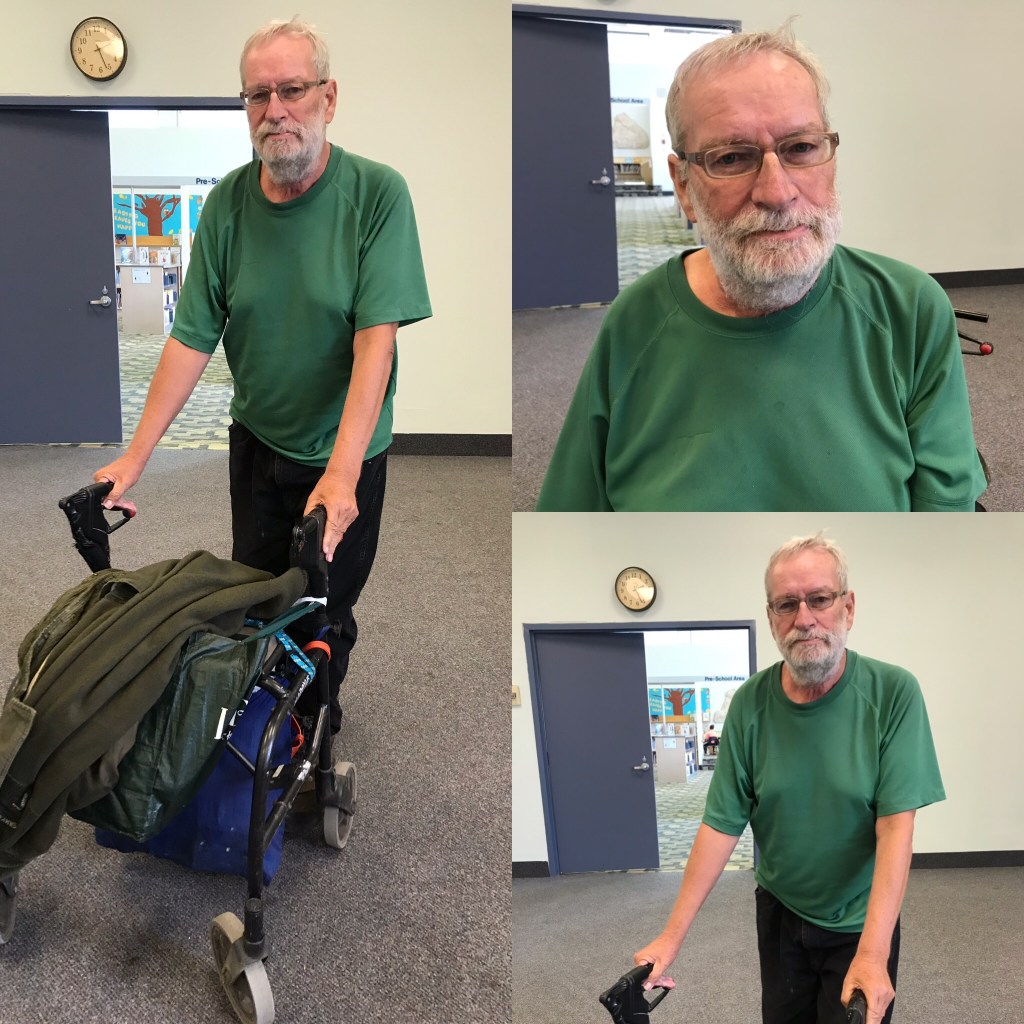
With the help of a walker that’s heavily laden down with bags and articles of clothing, Ronald Piet slowly makes his way into Toronto’s Forest Hill library. Pain is evident in his movements, his gait unsteady and faltering.

“What weighs me down is my injury,” he says. “Pain, physical pain in my legs, neck and back.”

The 62-year-old says he was in a streetcar collision eight years ago and suffered spinal damage, which causes chronic pain.

It is a difficult fate for a man who was an avid outdoorsman in the not-too-distant past.

“You might have called me a wilderness man.”

While Piet currently lives in a one-bedroom apartment in the Bathurst and Eglinton area, just ten years ago, home was a remote cabin on Manitoulin Island, with no running water or electricity.

“No one would know it by looking at me that I was practically a mountain man,” he says with a chuckle. “I went out hunting with a bear nearby, fishing, wildcrafting, gathering fruits, nuts.”

Piet says he lived off-the-land in this cabin for six years on a part-time basis, before he relocated there full-time for two years.

“I do enjoy being in nature and I also like challenges, and I also like doing new things that I never considered doing before.”

Still, in a life marked by contrasts, life in the North was a far cry from where Piet started out.

The retiree was born in Hamilton, Ontario, one of three sons of Dutch emigrates. He says his childhood was “not particularly good.”

Piet describes his parents, who remained together until their deaths, as “stingy and unkind.”

He says not only would they never acknowledge his excellent grades and other accomplishments, but “both of my parents hit me. Frequently.”

Piet says this is why solitary activities have always appealed to him.

“For example, at the age of ten, I created my own darkroom and started processing film. I was self-taught. I enjoyed it because it was a technical challenge, and it was something you could measure yourself against others with.”

It is this interest in photography that would eventually lead him into a career working with film.

Piet started his working life as a salesperson in a camera store in Dundas, Ontario, and eventually transitioned to processing colour prints and slides at a still photography lab. He is particularly proud of some of his professional photography.

“I did some really fine music concert photography, and MuchMusic bought some to decorate their halls with at one point.”

Eventually, however, Piet says he could not resist the call of the wild, abandoning his job in his forties, to move to Manitoulin Island.

He says his ingrained studiousness served him well. Piet says he learned to live off the land, in large part, by reading and studying, and through trial and error. For those considering making a similar move, Piet says a good place to start is by learning to fish and hunt small game, like rabbit.

“And then you go and spend time, patiently, pursuing those things because both of those activities require a long period of time when you’re not even talking.”

His German Shepherd “Freedom” kept him company, but the isolation would sometimes be hard to deal with.

“Well, books (were) very important, and I also had a good AM radio that I would listen to talk radio shows late at night when I had nothing else to do, and on intriguing subjects or whatever was going on that was important to other people in the world.”

But living off-the-land was not sustainable in the long-run. And when the money ran out, Piet left rural Ontario, for life in Canada’s largest city, after obtaining a job at Deluxe Labs, an Etobicoke picture and sound post-production house.

“You would run test strips, watch on a monitor as the film was coming through, and then you’d know if you had to do anything — adjust colour balance and density, and see whether any other flaws were showing up.”

“I immensely enjoyed that job. To me, it wasn’t even work.”

He says, however, in 2011 he lost his job due to the “whole digital revolution”, an experience that made him “heartsick.”

After six months on the job hunt, Piet decided to make a career change and train to become an RMT. He had just been accepted into a program when he had his accident.

Piet now lives on assistance from the Ontario Disability Support Program.

“It’s hard to make ends meet. It would be impossible if I lived alone,” he says. “But I have a roommate. It keeps loneliness at bay. We watch shows together, do crosswords, have conversations about various things.”

Piet was married twice, but neither relationship lasted. Still, the loss of his wives is not what he mourns most in life. He says apart from his injury, his greatest regret is that he never had children.

“I think about that often, especially as I get older. Like Thanksgiving is coming, every holiday is difficult. Christmas is a big one. It gets lonely.”

Nonetheless, Piet counts himself happy. He loves to cook, and the self-described audiophile enjoys “real high-quality music and audio and video productions. I’m very interested in film and music that is very well-produced.”

And while Piet knows the pain from his injuries is not likely to improve, he still has hope for the future.

“That I live out the rest of my life in reasonable comfort, access to groceries, with a pretty good kitchen and a good sound system and computer and monitor.”