Single by choice: “Men that chased me I should just run, run around like the devil and not stop”

Anne Elizabeth, 78

My Life in a Nutshell

  • I lived in Toronto for 35 years, but have moved home to rural Ontario
  • I have been married twice and have not been lucky in love, “the first was a tyrant, the second an alcoholic”
  • I had a great childhood, “because we had more money than most kids. So we had the best of food, the best of toys, and our mom and dad took us on a trip every year, and we would go out every weekend. We would go to the movies every Saturday night, and out for a little treat.”
  • I’m proud of the fact I went back to school and got my high school diploma at 25
  • I care most about my family and my animals
  • I don’t think people care enough about each other
  • I enjoy a pint of beer a day
  • I love cooking, baking, dancing, home decorating and playing cards
  • My life wasn’t necessarily a happy one, but it wasn’t all unhappiness either
  • I couldn’t care less how others view me

Anne’s Story

(In my last post, I interviewed Bob. In this post I interview Anne, his older sister.)

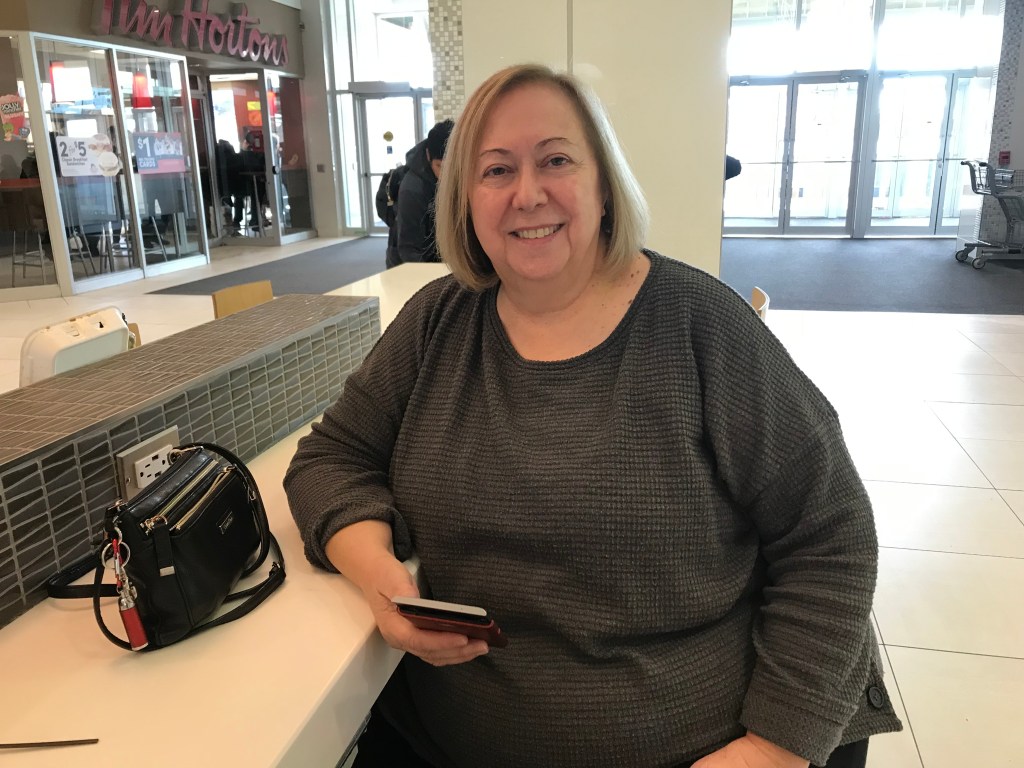
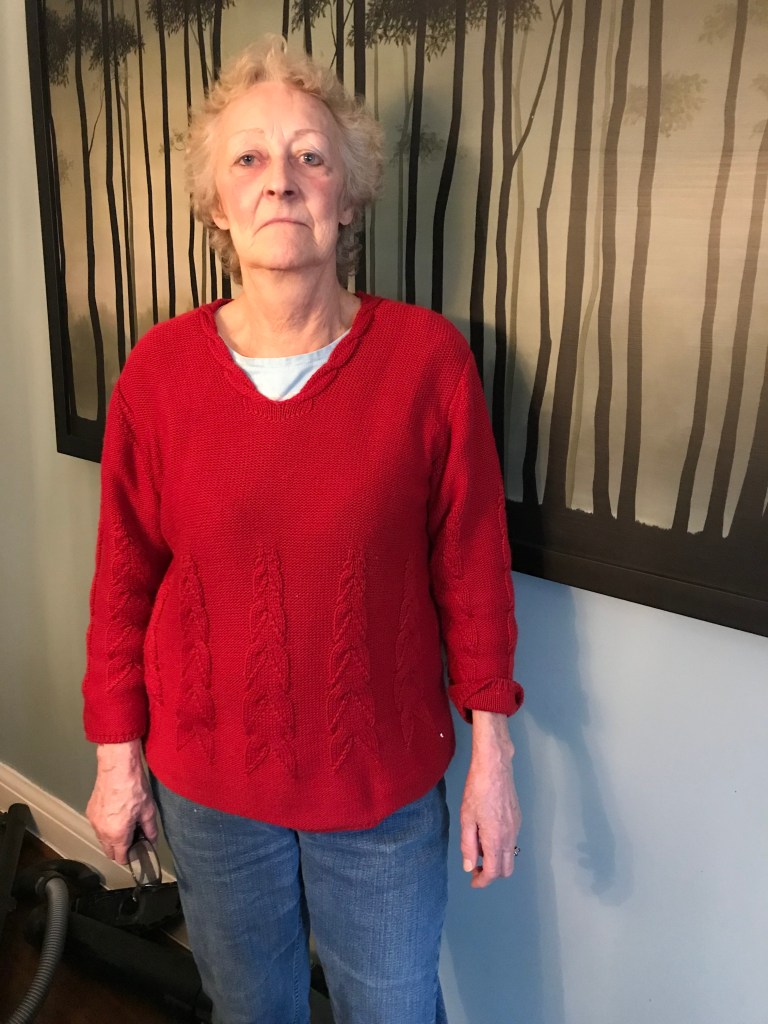
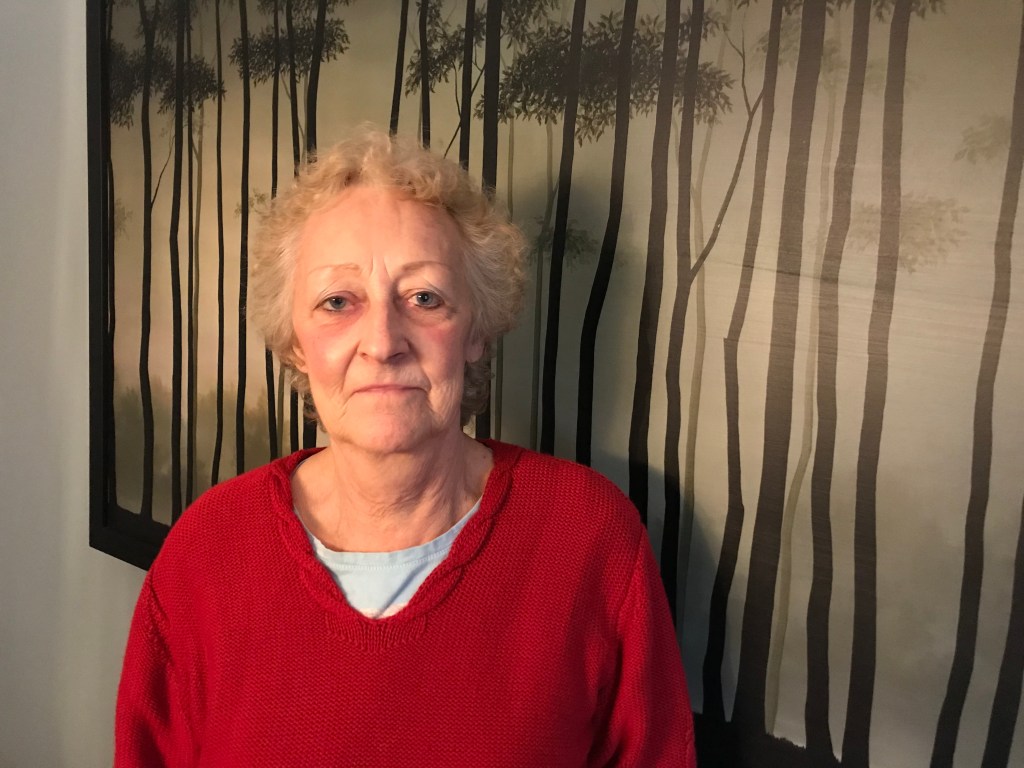
Anne is 78-years-old, but looks significantly younger. She is tidy and well-kept, wearing relaxed jeans and a bright sweater, and her deep blue eyes are enhanced with just a touch of makeup. Despite her age, her face has remarkably few lines, and her expression is alert and lively. Still, a touch of sadness tinges her expression, which is most evident in the downward turn of her mouth.

Nonetheless, the retiree describes the last 20 years as “the happiest years of my life.”

Anne says that’s because she’s been single for exactly two decades.

“It’s all one-sided,” she says of marriage.

Anne has been married twice, and says her marriages were the most significant hardships she’s ever endured.

“All men are like babies. Men are exactly like babies. It has to be their way or the highway. So I said, ’take the highway.’”

Anne was born in rural Ontario in July 1941. She says, like her sister and her mother before her, she married at 17. She says marrying in your teens was not uncommon then, and Anne believed she was in love.

“I thought it was like a fairy tale.”

But marriage to her first husband turned out to be anything but.

“The first was a tyrant.”

She gives an example of life with Raymond.

“One time, my first husband got really mad at me. And I went down to my mom and dad’s, and when I come home he had the shotgun. I had to run in the field and duck.”

She says he shot at her a “couple times” because he was angry she had refused to go to a dance with him.

The marriage didn’t last more than a couple years after that point, and she left when she was 28.

“I had a job at the hospital and I worked in payroll and Human Resources, so I finally said ‘I can support myself so I’m leaving.’”

Leaving wasn’t as plausible only a few years earlier. Anne says she only had a grade 9 education when she wed.

“And women didn’t work in those days, the way they do now. There were only teachers, librarians and nurses. Very few women worked, they stayed home and looked after their family.”

But she says three years after getting married, she decided to go back to school. Anne was 21 at the time.

“I went back for four years to high school and got my 10, 11, 12 and 13.”

She describes this as the accomplishment she’s most proud of in her life.

“I was the first woman, or, in fact, male or female in our town that ever went back to high school after I was married. And then others followed.”

She says getting her diploma opened doors, and she was able to leave her first marriage.

But it wasn’t long before she would meet her second husband.

“Out of the frying pan and into the fire.”

Anne describes her second husband as “worse than the first. The next was an alcoholic.”

She says Robert always drank, but his alcohol consumption got heavier over time. She says she should have known how bad he would get, given his family history.

“They were all drunks except one,” she says.

“My mother never liked either one (of my husbands). She could tell. She could tell.”

Anne declines to describe anything more about her 13-year marriage to Robert, although she says there are a lot of bad memories: “too many to tell you.”

After divorcing her second husband, with whom she had moved to Toronto, Anne had three subsequent relationships, and was even engaged one more time.

“They were a disaster too,” she says.

“Men that chased me — I should just run, run around like the devil and not stop.”

Anne says she wanted to be a homemaker, but that was never really a choice.

“I wasn’t crazy over working but it was a necessity. I had to support myself.”

Anne is proud of the work she’s done, and you can hear the pleasure in her voice when she describes how she was treated with respect and appreciation, given she was so “highly organized.”

“I would rather have been happily married and had children and that little white picket fence, but no, it never happened to me.”

Anne never had children of her own, but says her brother always reminds her, “don’t say you never had children. Because you helped bring up mine and you helped bring up Tracy (her sister’s son).”

She has fond memories of dinners and movies and excursions with her nieces and nephews over the years.

“That’s what I remember. The highlights is having the kids.”

Apart from her marriages, Anne says she has no regrets, and she “couldn’t care less” how others view her. She says for her, the most important thing in life is family.

“I really have nothing else. And my little animals. My little animal family. I love those.”

Anne has always had dogs, and at times, she took care of the occasional cat.

“They’re the things that were completely mine that I loved and looked after, and they were just mine. They’re such loveable little things and they need loving and attention and you love them and they love you.”

Anne says she has never felt lonely without a partner. After her father died ten years ago, she left Toronto and moved home to rural Ontario, and currently lives with her brother. Her sister and brother-in-law of 56 years live in the house next door.

While she takes care of the cooking, laundry, interior painting and decorating, Anne says her brother does the “roofing and all that stuff.”

“I guess stuff I couldn’t. I only do women’s jobs, which I don’t think putting up light fixtures is a woman’s job.”

She says this “traditional” arrangement works well for them.

Currently, Anne says her life is quite busy. In the summer, she loves gardening, and year-round she likes cooking and hosting dinner parties. She especially enjoys baking, which she does often for the Anglican Church in town.

“Well, my mother was a cook. Her mother was a cook. My sister was a cook for a living. So it runs in the family.”

When asked about the future, she replies with a bark of a laugh, “What future? I’m 78.”

“I take it a day at a time, is all I do. If I wake up in the morning, that’s great. I got one more day.”
Out of the spotlight: “I’m just another face in the crowd, that’s all”

Bob, 75

My Life in a Nutshell

  • I’m a widower and retiree who lives in rural Northern Ontario, and come from “the last generation of frontier people.”
  • I care about my family: “I’d like to see them happy”
  • I wish people cared more about the truth
  • I look back fondly on my childhood, “because my family had a large general store and there were still a lot of people in the community. We used to have a lot of good times during the holidays, Easter, Christmas and so on. We used to go blueberry picking together and all that”
  • I love to draw and paint and wanted to be an artist, but I never pursued it because “it seemed frivolous”
  • my wife and I faced discrimination because people weren’t as accepting of interracial marriage in the 1970s
  • my greatest regret is I that I didn’t “treat my wife better,” I didn’t understand how PTSD from her childhood impacted her throughout her life
  • I was an Olympic-calibre athlete but suffered a severe spinal injury
  • I was once an atheist but now believe in God
  • I built my family home and I built my cabin single-handedly
  • my life became a disappointment but I am still “basically happy”

Bob’s Story

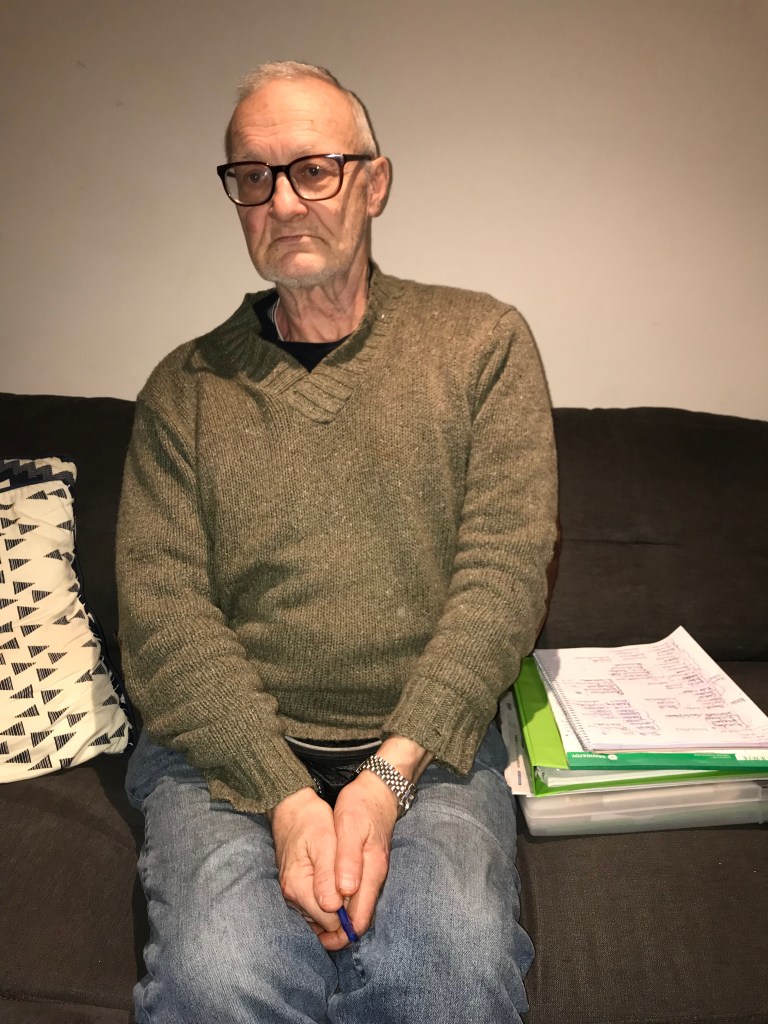
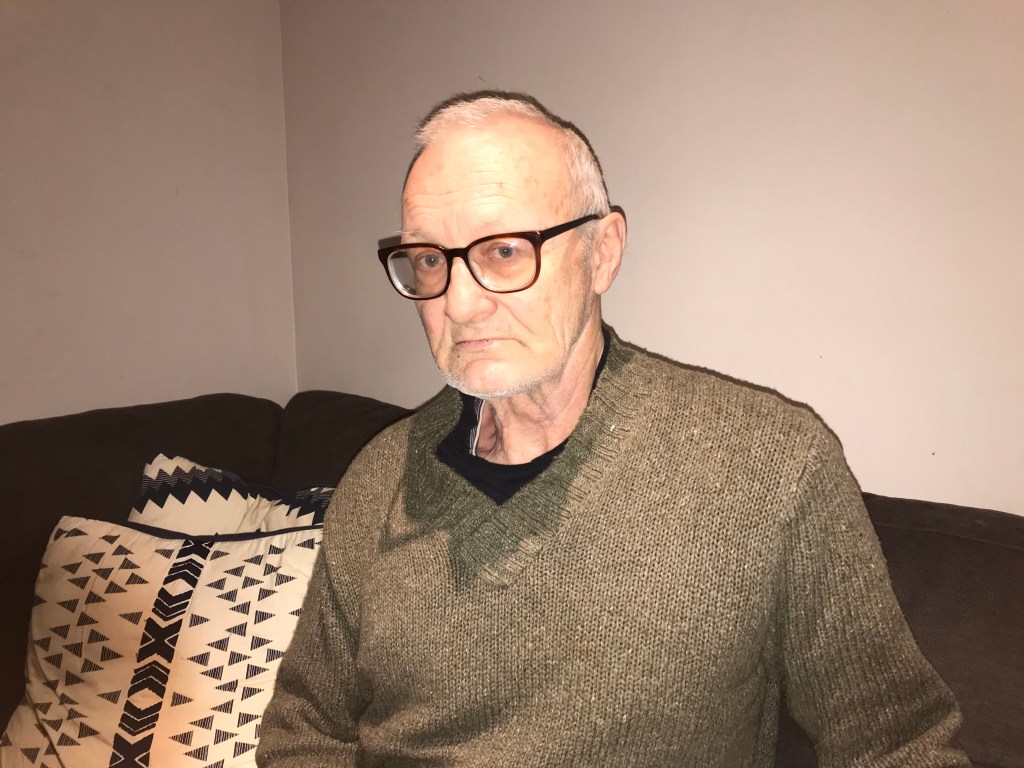
Bob’s face is bristled with a light dusting of white whiskers, his hair, what remains of it, is trimmed close to his head. He is not a frail older man; nor, however, is he glowing with health. He is well-built, though, particularly for a 75-year-old man, despite the fact he appears fatigued.

When I sit down with him he is writing notes in lined a notepad.

“I’m making lists. This one is about all the foods I can grow in my garden. This one is about new research, new ideas. You can always find an interesting book, some of them on cancer.”

Bob reveals he has battled cancer this year, and spent nine months receiving chemotherapy and other treatments.

“From the time I was a little boy I always liked to have warm feet,” he says. “Now that I had chemo for cancer I’m having trouble with cold feet.”

Bob says he discovered some lumps in his abdomen and groin more than two years ago, but he ignored them until he experienced a “severe pain” last December. He went to see a doctor, and a slew of appointments with specialists soon followed. Bob would learn he had lymphoma just after Christmas.

“It was hard to endure, but I never doubted I would get better. And when I learned to pray and asked God to heal me — it just disappeared. I can’t say for sure that God healed me, it could have been the medicine, but everybody was surprised, including the oncologist.”

Bob finished chemo this summer, and just last week had his three-month checkup. Thankfully, there was still no trace of cancer in his body.

“I was surprised, I was expecting to go through radiation therapy.”

Cancer is a terrifying diagnosis, and chemotherapy is notoriously unpleasant. Still, this is not what Bob would describe as the greatest hardship he’s ever endured. He says he suffered a spinal injury when he was at a track and field meet in high school, and for a short time he couldn’t walk.

“I had this terrible fear. I realized: ‘I’m paralyzed. I’m not going to live this way. I’m going to kill myself.’ My intention was to hang myself, because I could still do that.”

But Bob says his back miraculously repaired itself. Once again, he credits God for his recovery.

It is an interesting turnabout, for a man who was a self-admitted atheist most of his life. Bob says he only became religious in the last few years.

“I learned how to pray. So my prayers can be heard in heaven.”

While religion currently preoccupies him, Bob’s life has been one of exploration — both literally and figuratively. He loves books, reading and reflection, but he also loves the outdoors. He has lived across the country, in both rural and urban settings, and has had a variety of careers — from landscaping and forestry, to owning and operating a restaurant and two corner stores.

“I wasn’t particularly interested in anything, so I just wandered around from one thing to the other, to keep from getting too bored with life.”

Bob actually met his wife of 35 years when he was the supply manager in a hospital in small-town Ontario.

“She came here as a nurse. She’d been in Newfoundland and she was lonely. There were no Koreans there and she could barely speak English. So when she heard there were some Korean girl nurses in the hospital where I was, she came over.”

They married ten months later. He built the home they lived in when she was pregnant, and their first child was just an infant.

“I started in August one year, and I finished it in the spring, the next year, because we moved in in June.”

I express surprise that he built the family home, a four-bedroom with a greenhouse, completely on his own.

“Well, in the country, people did most of their own building,” he says. “I like working with groups of men outside. I used to get involved with building, watching them, working on barns and that sort of thing.”

Bob describes his marriage as having many highs and lows. He says his wife lived through the Korean War and suffered from PTSD, something he wishes he’d better understood when he was younger.

“If there was 50 ways to go from point A to point B I would want to take every one — one after the other — to see what was there. But not her. She had to always have the exact same routine, or she would go nuts. She couldn’t take any stress.”

Bob says he and his wife could not have been more different. He had a “happy childhood”, while she grew up in wartime and lost her father. She was also from Seoul, a huge city, while he was born and raised in rural Canada.

But when they met, he says, “there was instant recognition.”

Still, while he never “thought a whole lot” about the fact his wife was a different race, he says others did question their decision to marry.

“Because it wasn’t that common.”

He says, at times, they faced discrimination — and it didn’t matter if they were living in a small town or a larger city. And they faced condemnation from both caucasians and asians. Thankfully, he says, people’s attitudes are changing.

“It’s becoming more common, interracial marriage.”

His wife died 15 years ago, from pancreatic cancer.

“Oh, that was difficult. But the marriage was slowly coming apart because we had such different backgrounds,” he says. “I didn’t really adapt well to living in the city because all of my education was in forestry and agriculture.”

Still, he lists getting married as a highlight of his life, along with the moments his two children were born.

Now, he says, his greatest hope for the future is: “to live long enough to see my grandkids growing up.”

And while he says he has regrets, and has “often” made bad decisions, he is content.

“More or less. I don’t know if I ever knew joy, but I’ve always basically been happy.”

Bob is currently retired. He owns a home he shares with his sister, often visits a cabin he built himself, and lives surrounded by close family.

“I’m just another face in the crowd, that’s all. I’ve never been important,” he says. After a short pause, he adds, “I never wanted to be.”

The highs and lows of freelancing: “It’s definitely not a career for those with an easily-bruised ego”

C.P., 44

My life in a nutshell:

  • I care about my kids, my career, and my husband (but he can take care of himself)
  • I’m a professional (freelance) clarinetist
  • 75% of my anxiety is over where the next gig is coming from, and I sometimes wonder if freelancing is worth “the hustle”
  • I hate practicing but enjoy the performance
  • a professor once told me I should be a comedian
  • I hate “Plastics. Fake People.”
  • It’s freeing knowing that the older I get I don’t have to hang out with anyone I don’t want to. I may have to work with you and be civil, but I don’t need new friends, I’ve got my friends.
  • I named my second son after my mentor in grad school, which he said he felt “kind of weird” about
  • a significant hardship I endured is being in a car accident in 1996, which set me back in school and auditions for a year
  • I look back fondly on any family time
  • I’m a movie trivia aficionado, and people will not play with me
  • I want people to respect me as a person and as a player
  • I hope for health, financial stability and general happiness in the future

C.P.’s story

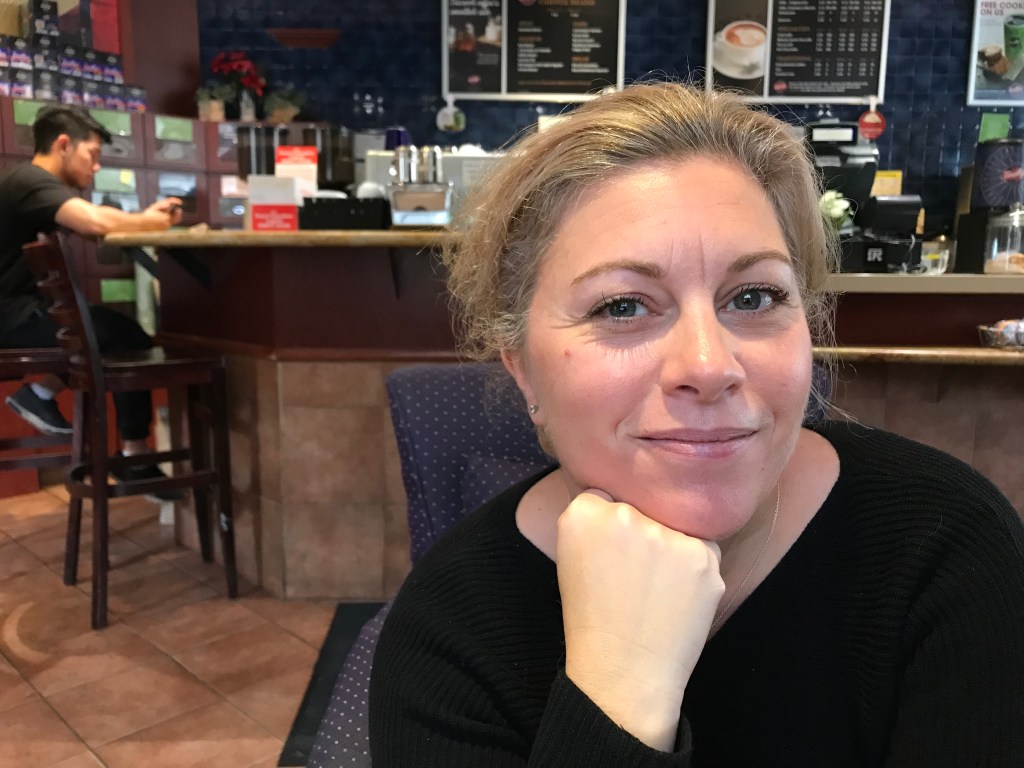
The chaos of the school rush has just ended, and the slow, heavy tension of morning traffic has begun to lift when C.P. walks into a coffee shop on Eglinton West. The cafe is quiet, with few other customers, and the diminutive blonde, who stands north of five feet, orders her coffee in hushed tones, trying not to draw too much attention.

In fact, nothing about C.P.’s appearance this morning is designed to be attention grabbing. Her face is not made up, her hair isn’t styled, and her clothes consist of a neutral sweater and jeans. In some respects, it’s hard to imagine this woman craving the spotlight. And yet, life in the limelight is what C.P. lives for.

“Just me, standing on a box on a stage, playing by myself for about five minutes, which doesn’t seem like a long time, but it’s a long time.”

With glowing eyes, the freelance musician recalls a moment from a year ago, where the conductor of the North Bay Symphony planned a program around her.

“There was a huge clarinet part and a huge clarinet solo. It was like the C.P. concert. And what I was amazed about is that I didn’t freak out, I didn’t pass out. I had done all the work that I could do and it came out just as I wanted. And that’s why you put up with all the bullshit, freelancing.”

Luminous moments like these keep C.P. going in a career that can take its toll on even the most thick-skinned.

“We have extreme highs and extreme lows,” she says. “It’s definitely not a career for those with an easily-bruised ego.”

While at first glance C.P. might appear shy or introverted, it soon becomes evident she has a lively, animated personality. She laughs and laughs often, and is quick with a joke.

When asked how she thinks people view her, she says, “Energetic, spunky, fun, outgoing, extroverted and happy, like I’m a little elf and I’m happy all the time.”

And then with a bark of a laugh, she adds, ”Not true!”

It is hard to be happy all the time in a profession that is so competitive, given the scarcity of permanent jobs. C.P. admits she is occasionally plagued by worries over getting the next gig.

“I’m at a certain level, and I wonder, ‘Why? Why are they getting called and not me? Is it me as a person or me as a player?’ And that’s when I get anxiety. ‘Do they not like me? Do they not like my playing?’ It’s your identity.”

C.P. has been playing the clarinet for more than 30 years, so it’s not hard to imagine why she associates the instrument with her identity. She first picked up the woodwind when she was an 11-year-old Grade 6 student.

“The teacher said — ‘Hey, you’re pretty good at this’, and the flattery sucked me in,” she says with a smile. “I had something I was good at; and plus, I got out of class, so it sucked me in.”

Despite the fact both of her parents were teachers in her hometown, Waterloo, Ontario, C.P. says she hated school. But the clarinet inspired her, and her passion for the instrument took her all the way through graduate school.

“When I get to play stuff like Mahler and Beethoven, and you hear all the layers that go into it, it’s amazing,” she says.

Apart from music, C.P.’s other passion is her children. She has two young boys in grade school, whom she loves beyond measure. Still, she admits parenting also causes her some degree of anxiety.

“Every day I am worried I’m failing my kids, and I don’t think that will ever go away. I don’t think that I’ve done enough. I never feel like I’ve done enough for them,” she says.

C.P. says when she practices her instrument she sees immediate results. However, she says she won’t know for years — maybe even decades — whether she’s raising her boys right.

“Are they fed properly? Are they getting their homework done? Are they practicing piano? Are they watching too much tv? Are they having too much tablet time? Am I doing this right?”

At times her marriage also causes C.P. some unease.

“It’s like freelancing. You have your extreme highs and your extreme lows. I’m for it, but it’s hard,” she says with a laugh.

C.P. met her husband at her 28th birthday party, and has been with him ever since. But she describes how much she — and their lives — have changed since they first met 16 years ago.

“What happens from going from blissfully dating, blissfully engaged, and then the first few years are amazing — and then you don’t agree on anything. Why did it get so hard?”

She says there are many little resentments that can build over the years, particularly when you’re juggling career and family.

“It’s unravelled to a point, or it’s morphed to a point, where I have to stop it from morphing anymore. I think he probably feels the same way. It’s morphed to this point that I worry that if it morphs anymore it won’t last. But it takes work from not just one person, but both people.”

It is an uneasy admission for a woman who says, apart from performing, family is what makes her happiest. Her husband is Greek and C.P. comes from an Italian background, and moments with extended family bring them both joy.

“All the time we spend with family, weddings, even funerals, birthdays and holidays — it’s always noisy and big and fun.”

While they are not a “smug married couple”, C.P. says her husband has been supportive of her, despite the fact sporadic work does not always pay the bills.

“Without him, I would not be able to play. Thankfully, he’s not mean about it,” she says.

C.P. gave up full-time work when she had children because of the cost of childcare. She says given her workload at home, freelance work is all she can manage at the moment.

“I’m 44 and I’m going up against 26-year-olds who don’t have to work, and they can practice eight hours a day. I’m lucky if I can practice eight hours a week. So that’s why I’m happy doing what I’m doing.”

And C.P. does count herself happy.

“Why? I’m where I want to be. Not physically. I hate Toronto. Seriously,” she says with a smile. “But I would say I’m content and it took me to getting over 40 to say — ‘I’m okay. I have a good thing going, I think.’”

And despite the highs and lows of freelancing, she says she still enjoys her moments on the stage, when all the “blood, sweat and tears” are worth it.

“We remember the good times. The bad times we remember for about an hour and then we drink it away,” she says.

C.P. pauses for a moment and the laughter fades, before she adds, “I always said when it becomes work, I was going to stop.”

A life behind the lens: “Paul Bernardo was just a foot away from my camera”

K.D., 61

My Life in a Nutshell:

  • I care more about friends as I get older
  • I wish people cared more about their health
  • A significant hardship I’ve endured is being away from family
  • I’m the fifth of nine children, but never had any children of my own
  • I have been a cameraman for nearly 40 years and have covered stories all around the world
  • My career has been important to me and I take pride in my work
  • It bothers me if I get a feeling my work or effort isn’t being appreciated
  • I sometimes wonder if I should ever have moved to Toronto
  • I wish people would look at me and think: “This guy has his shit together”
  • I am “half and half” on a happiness scale
  • I’m a sociable guy, but I don’t get out enough

K.D.’s story

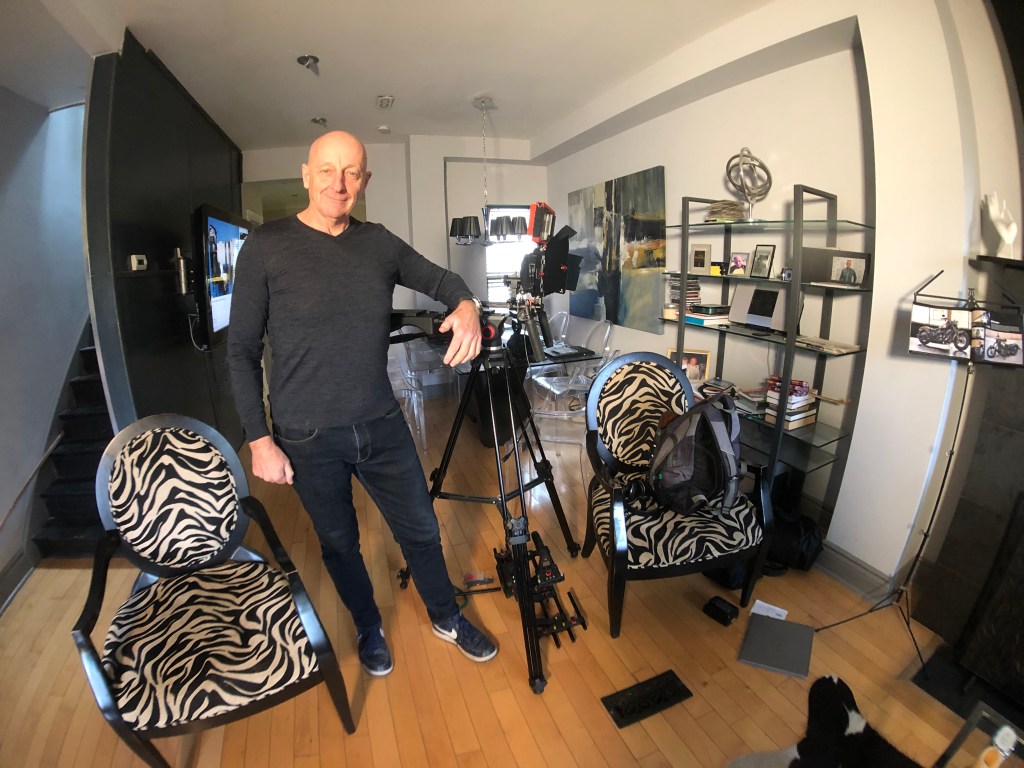
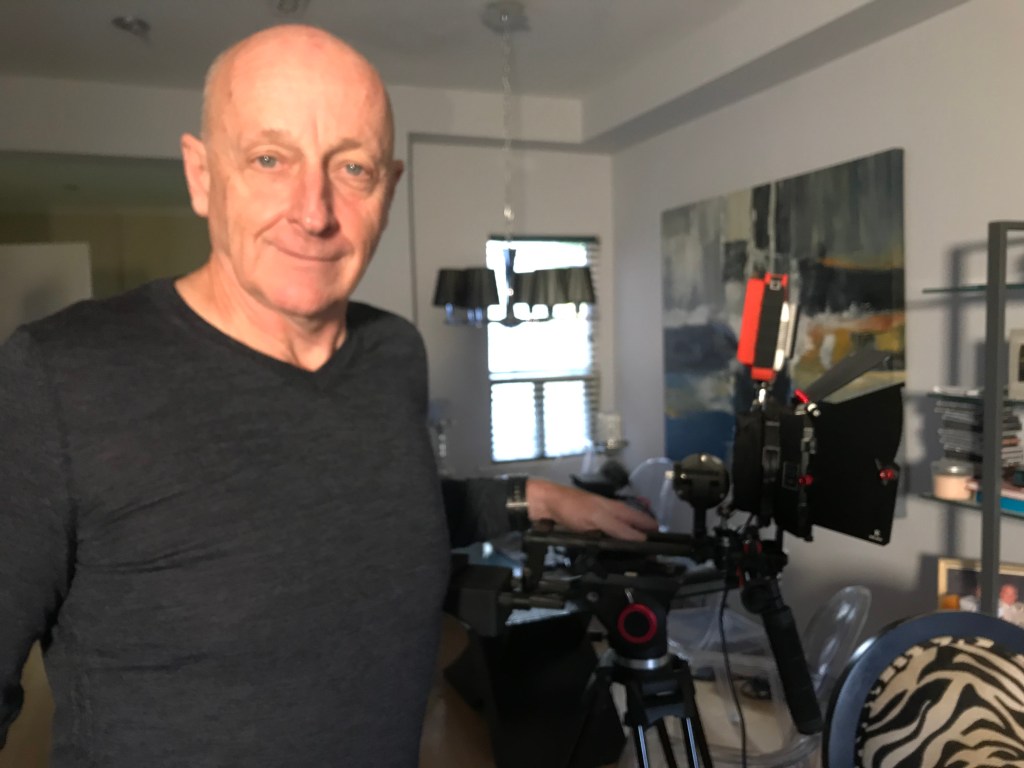
When I walk into K.D.’s home, a handsomely decorated semi-detached near Casa Loma, dozens of pieces of state-of-the-art camera equipment are strewn across his living room.  The 61-year-old is a veteran news cameraman, but he’s a newly minted freelancer.

“I don’t really have to work, so I’m not nervous.  But it’s a learning curve, going from a $50,000 to an $11,000 camera — it’s a learning curve.  They’re finicky.”

For 37 years, K.D. worked at one of Canada’s leading broadcasters.  In a recent round of cutbacks, however, the senior shooter accepted a package he couldn’t refuse.  

“It was a perfect time to leave.”

It wasn’t, however, a perfect time to retire.

“I don’t like that word,” he says.  “I’ve had a decent life and there’s still lots left.  I don’t think of myself as old.  I don’t want to get into that mindset.”

So now K.D. is starting over, picking up equipment and jobs where he can.  

“You know, I did a shoot with a former colleague recently and got paid quite a bit of money, so I hired an editor to come to my house.  We had bagels and coffee.  It was stress-free.  It was fun, so it was a good experience.”

It is a stark juxtaposition to the way K.D. started out in the business. 

“My first year I was so nervous, and I was driving what looked, essentially, like an old police car, and I almost hit a hydrant.  I ended up scraping the side and the back accidentally, and I was so nervous about losing my job I took it to an auto body shop and paid to have it repaired,” he says with a laugh.

K.D. was just 26-years-old when he began working in Toronto, Canada’s largest city.

“It was tough, very tough.”  

In fact, he says, in some ways camera work was the last thing on his mind when he was a “greenhorn.”

“There’s a lot of things you have to learn about this job.  Where to park, dealing with people, going to shooting scenes, wondering if you’re going to get shot, pushing the envelope with the cops to get the shot.”

But the nerve-wracking first years aside, K.D. went on to have an illustrious career, covering major news stories both at home and abroad.

“Because of my ability, people loved to work with me.  It gave me a good feeling that people had confidence in me, so I excelled at my work.  Work was probably pretty important to me because I didn’t have a family.”

K.D. has seen plenty of danger.  He spent a month covering the Gulf War.

“We weren’t sleeping, alarms were going off.  We’d get up to work all day and we’d get up in the middle of the night because planes would take off, the hotel would shake.  Scuds would come by fairly close, so we’d try to get shots.”

He’s also met some of the most dangerous human beings on the planet.

“Paul Bernardo was just a foot away from my camera.  I couldn’t believe how close he was.  I could have slugged him,“ he says of the moment he shot the notorious serial killer.  

“I looked him in the eye — he was about the same height.  I wanted to see if I could see the evil in him.  And I couldn’t see anything.”

K.D. has also met some of the most famous A-Listers in the world.

“Nicole Kidman just left a good impression.  We got her coming into the Princess of Wales Theatre, but she was coming by during the commercial break.  But she stayed and waited and we did our live with her. It’s amazing how some stars are just so accommodating.”

The ever-stylish cameraman, who has a penchant for Hugo Boss, has come a long way from his roots.  Not only is he 170 kilometres from his hometown, but as the fifth child of nine, he wore nothing but hand-me-downs as a child.

“When I was a little guy we’d get new underwear and socks, but when it came to pants and shirts, we’d open up the big red box in the basement and reach in and find something that fit us,” he recalls.  “Most of the time, they didn’t fit.  One time I remember pulling out a pair of green bell bottoms and they didn’t fit, but I wore them anyway,” he says.

Still, he says, given his “old-fashioned” upbringing, fashion didn’t matter to him.  As a youngster, his priorities were quite different.

“Just going to the river fishing, swimming in the river, staying there all day.  Making go-karts, climbing trees, the skating rink in the backyard, always being active.  It was great growing up.”

K.D.’s father worked on trains for the Canadian National Railway.

“All he did was work and bring money home.  We didn’t have much money, but we never starved. Although, with nine kids, you didn’t eat as much,” he says.  “The big thing was Kentucky Fried chicken.  If we had a bucket — boy, that was a big thing.”

While his father was laid back, he says his mother was the disciplinarian.   

“You didn’t want to be caught doing something.  She’d drive around with a wooden spoon looking for me and I’d be hiding in a bush,” he laughs.

He says, over the years, he has often wondered if he made the right decision in moving to Toronto. 

“Because as you get older — both of my parents are dead, and I didn’t see them much in my latter years.  It would have been a different path.”

In fact, he says, the biggest hardship he’s had to endure is being away from family.

“I can’t call up my sisters.  If they were here, I could call them and say, ‘Hey, let’s go to a restaurant.’  I don’t have that luxury where I can call any of them and say, ‘Let’s go out tonight.’  I’m sure a lot of people live with it; but, you know, your life is much more full when you have family around.”

That being said, K.D. admits life in London, Ontario would not have suited him.  He’s used to the fast pace of a big city and its restaurants and culture.

“When I drive my motorcycle North, it takes forever to get out of Toronto.  And when I get out to the suburbs, I think to myself, ‘I couldn’t live there, because it’s so far from everything.’ I have a subway right near.  I can walk to Yorkville in 12 minutes.”

At this point in his life, K.D. says he is fairly happy and enthusiastic about life, although at points he struggles with loneliness. 

“I don’t do well by myself all the time.”

That is why friendship is increasingly important to him. 

“I care more about friends as I get older, and making an effort at staying in touch.  I lost touch with a lot of people over the years.”

K.D. has had long-term girlfriends, but none of his relationships have ever stood the test of time.  He has no children.

“Certainly, I want to be with somebody, but I’m not letting it eat at me.”

And while he’s never been lucky in love — he’s had a lot of luck with real estate. 

“I bought a condo, bought a house, and have a rental apartment.  I wish I’d bought more, years ago, but things have skyrocketed.  And it’s a good experience.”

With his substantial package and pension, along with income from his rental properties, K.D. is well-situated financially.  It makes the prospect of freelancing more appealing.

“Once you get off the treadmill of work, you realize — ‘Huh, I’m okay.  I could do what I want.’”

And while everyone has regrets, K.D says he tries not to dwell on them.

“I could analyze and rip my life apart as much as I want.  ‘Why didn’t I stay with that woman or have a kid?’  I certainly would have had a different life.  But honestly, sometimes I just thank God I’m by myself.  I try to keep a positive outlook.”

K.D will be going to Bali for a couple months over the winter, and does not rule out freelancing while he’s there.  He’s also expecting some friends to visit. 

“Just because I’m alone, I’m not really alone,” he says.  

“The point is, I want people to to think of me as a nice person, and that I’m smart and that I have my shit together.  I want them to think I I try to go the correct route, try to stay healthy, try to stay in touch with family, and that I’m not bad off.”

Resigned to retirement: “I’m happy, but a little bored”

Lou, 69

My Life in a Nutshell

  • I care about my family
  • I wish people would ask the right questions
  • I look back fondly on my teen years, walking with friends from Forest Hill Village to get french fries at Silver Rail downtown and then walking home: “It was a very carefree existence”
  • I’ve been married 45 years and have two sons; “you fall into and you fall out of love all the time, that is a true marriage”
  • I’m proud of being able to help people and make a difference in their lives, even if it isn’t “world-shattering”
  • I always believed you stay out of trouble instead of getting out of trouble (it has helped prevent regrets)
  • I think because I’m such a chatterbox, people have no idea how much I keep a secret
  • I’m a gregarious recluse
  • I don’t believe in “no pain, no gain”; if there’s pain, something’s wrong
  • In the future I want to travel and have more grandchildren

Lou’s Story

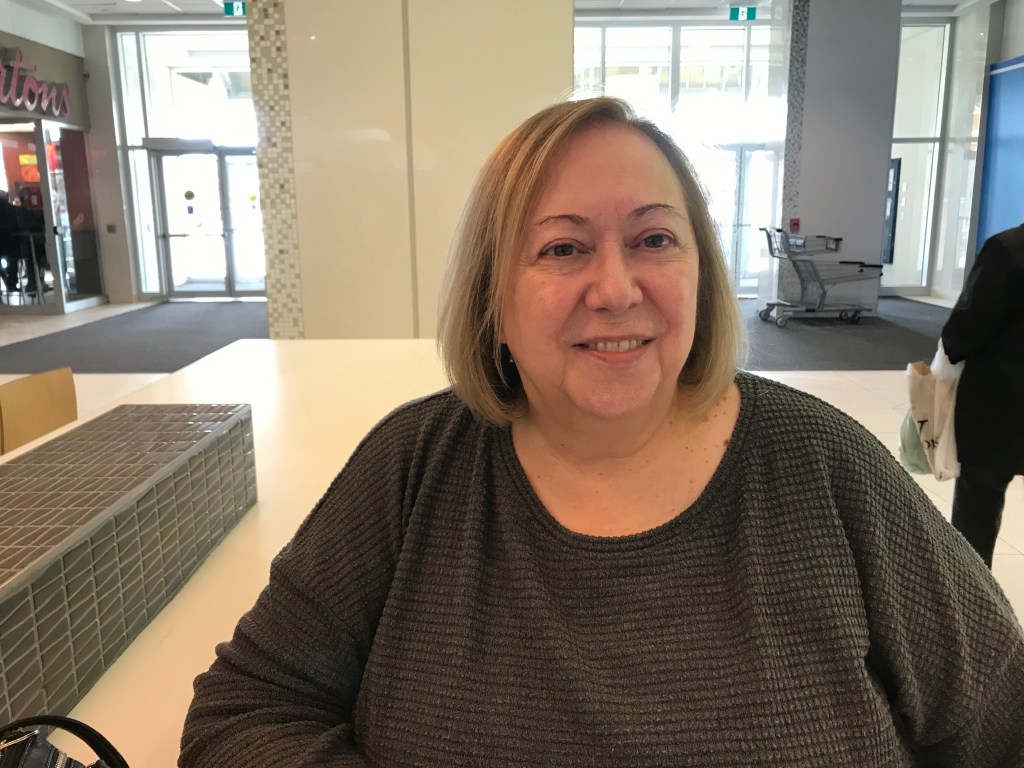
When I first see Lou she is sharing a table with two other women, a half-smile on her face.  I hesitate before approaching the trio, but the 69-year-old emanates a soft warmth, and I find myself asking her to share her story.  Lou cheerfully responds in the affirmative; it turns out her table companions are as unknown to her as I am.

It soon becomes apparent why she has decided to take the time to speak with a complete stranger.

“I am, actually, a little bored, because now I’m retired.  My husband won’t retire until next February,” she says with a chuckle.

Laughter comes quick and often to Lou; it is part of her charm, as is her straight-forward way of speaking.

“Do you know what it’s like to watch people take an hour to get to the point when you could just blurt it out?  You don’t have to accept my opinions, but at least you know what they are.”

This may explain, in part, Lou’s success as a (former) freelance marketer. 

“If you were on my project team there was always clarity.  That’s why I got so much done and I won so many awards.”

She smiles as she describes one of her longest stretches of employment.  Lou says she was originally hired to complete one contract for Nestle Canada but ended up working one project after another for 18 years.

“I worked in about every area for the company except for ice cream and water.  I had a lot of fun.”

If her long stretch at Nestle’s came as something of a surprise, it is no more surprising than the fact Lou ended up in marketing at all.  She has a degree in psychology from York University.

“But I knew I was too empathetic.  I knew I wouldn’t be able to help people.  So I went out into the world.”

Nonetheless, Lou admits she did try to help others as best she could over the years.  While she did not accomplish anything “world shattering”, she says she served as a mentor to countless youngsters.

“On a daily basis, you can help people as individuals and make a difference in their life.” 

Lou’s life began in Southern Italy.  She had three siblings. She describes a pleasant childhood, marred by one small regret, which illuminates her kind-hearted, gentle nature.  

“I once dropped dirt in my sister’s eye.  I’m still, to this day, ashamed of thinking that I did that.  The poor little thing may have been four.”  

When she herself was four, the family moved to Canada, to a home her father purchased in Forest Hill.

“He didn’t want to live near the Italian community because he said they gossiped too much,” she says with a grin.  

In fact, she recounts many stories of her parents with warmth and humour. 

“They were always on the same page.  They quite adored each other.” 

Lou, meanwhile, has been married to her university sweetheart since she was 24. 

“It is all about determination, picking the right person, who has a similar moral view.  And both of you believing you want to stay together.”

She says, however, marriage takes work.

“You fall in and out of love all the time.  That is a true marriage.  You fall out of love and then you fall in love again.”

Lou waited five years after marriage to have children, despite her mother’s impatience to become a grandmother.

“She asked me, about three years in, why I was not pregnant yet.  She said, ‘Why don’t you try it, you might like it?’” Lou recalls fondly.

Lou eventually had two sons, who are nine years apart.

“They aren’t doctors or lawyers, but they went to university.  One has an MBA, the other has a degree in science.  I’m a big believer in doing what makes you happy, because if you do what makes you happy, you will do well.”

Ironically, even though she originally told me she was retired, it is at this point I learn that she still works, at least part-time.  Six years ago, Lou launched a wine tour company of the Niagara Region with her sons.  

“It’s been pretty good,” she says, while we scroll through a website that is both artful and elaborate.  

Still, there is a hint of fatigue in her voice, when she admits, “It’s a lot of work.”

“All summer (he) never gets to see his family,” she says of her eldest.

In the off season, however, life is much less busy, with tours relegated to weekends.

“I’ve started taking watercolour, but I’m a control freak so I’m frustrated,” she says with a laugh.  “But I really like it.  I’m happy, but a little bored.”

She says she is now waiting on her husband’s imminent retirement, so they can do some travelling.  

In the next few years, she also hopes for more grandchildren.

“And I want to see my grandson married.”

It is an ambitious goal for a woman approaching 70.  Lou’s grandson is currently eight years old.  But the woman who was once called the “Sargeant Major” at work says she won’t let life “just go by.”

“I’m very determined.”